Loading...
Serving Taunton, MA and surrounding areas. (508) 464-9581
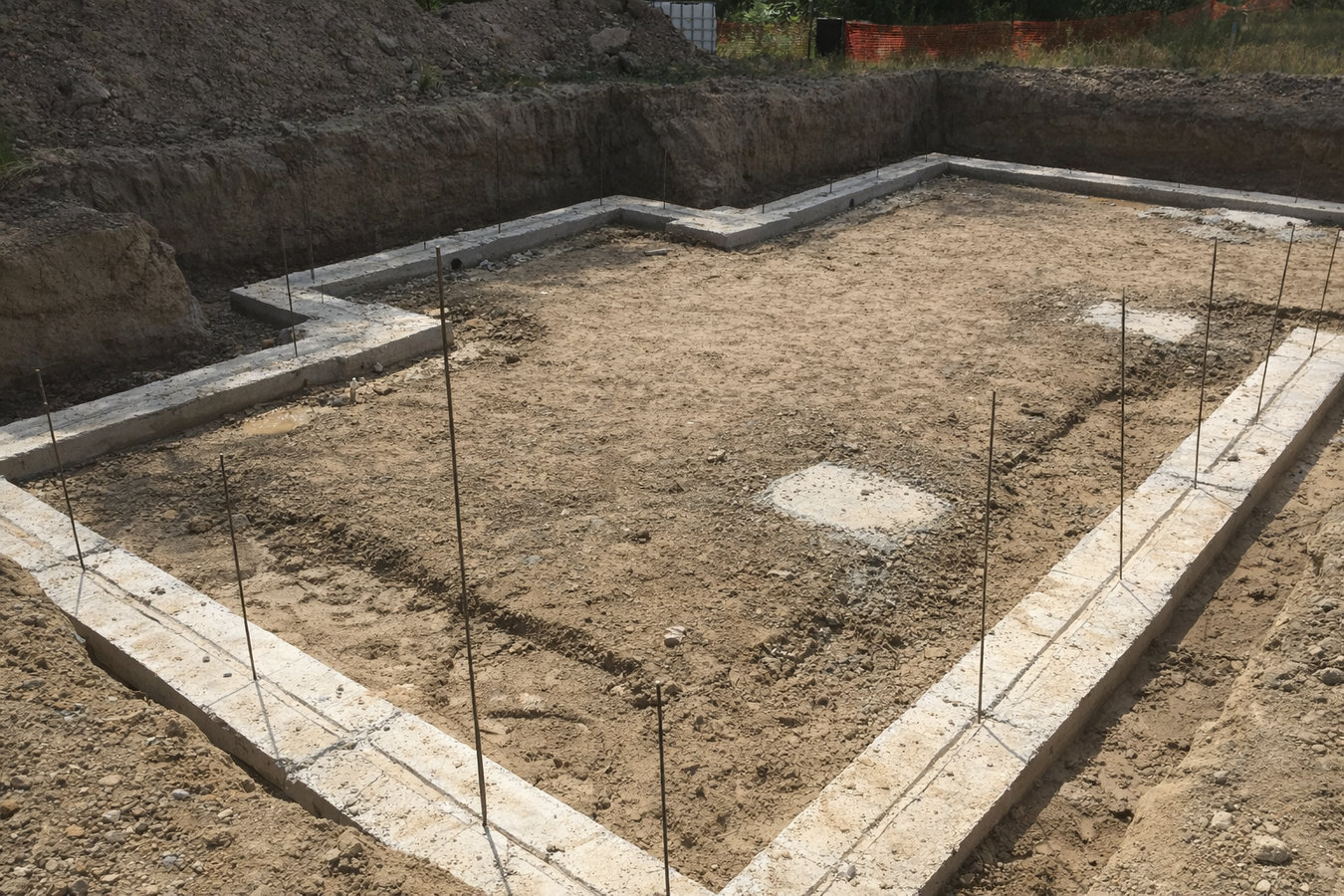
A deck that leans, a porch that pulls away, or a new addition that needs a solid base, we pour concrete footings in Taunton to the required 48-inch depth with rebar reinforcement and a city inspection before any concrete goes in the ground.
Concrete footings in Taunton require excavating to at least 48 inches below grade to stay below the Massachusetts frost line, setting reinforced forms, passing a city inspection before the pour, and placing concrete with embedded rebar, most residential footing projects take one to three days of active work once the permit is approved and the inspector has signed off.
A footing is the buried base that supports everything above it. Your deck posts, porch columns, addition walls, and foundation walls all transfer their load downward through a footing into stable ground. In Taunton, where the freeze-thaw cycle is a real annual force and where soils can include glacially deposited clay pockets that shift and drain poorly, a footing that was not built deep enough or without reinforcement will gradually fail, taking the structure above it with it over time.
Footing work is often part of a larger scope. If you are building a new addition or structure, those footings are typically followed by full foundation installation. If you need an independent structural lift first, footings and foundation raising are often coordinated as a single project scope.
If a gap is opening between your deck and the house, or the deck surface is no longer level, the posts may be sitting on footings that have shifted. In Taunton, this often happens when older homes have shallow footings that were not placed below the frost line. The ground heaves in winter and never quite returns to where it started. This is a safety issue, not just a cosmetic one, and it gets worse each year.
Diagonal cracks running from the corners of windows or doors, or stair-step cracks in block or brick, are a sign that the footing below is moving. Taunton's mix of clay soils and freeze-thaw cycles puts older footings under repeated stress every winter. Small cracks can be cosmetic, but cracks that are widening or have a lip, where one side sits higher than the other, mean the footing is no longer doing its job.
When a footing shifts, the frame of the house above it moves too, and the first visible sign is often doors and windows that used to work smoothly but now drag or no longer close squarely. This is especially common in Taunton homes from the mid-20th century, where original footings may be near or past the end of their useful life. If multiple openings changed behavior around the same time, the cause is likely below the floor.
Any new structure that attaches to your home or carries significant weight needs proper footings before anything else gets built. This is not optional; Taunton's building department will require it as part of the permit process. Getting the footings right at the start is far less expensive than fixing a settling structure two or three years later.
Every footing project starts with a site visit, not a phone quote. Footing costs in Taunton vary significantly based on how deep the crew has to dig, how many footings are needed, whether the soil requires extra drainage preparation, and whether there is ledge rock below the surface. Contractors who quote without seeing the site are guessing, and homeowners end up absorbing change orders later.
Once the scope is agreed to in writing, we apply for the building permit through the City of Taunton's Inspectional Services Department. The city inspector visits the site after the crew has dug to depth and set the forms, before any concrete is placed. That inspection is not a bureaucratic hurdle; it is your confirmation that the most critical underground work was checked by someone independent of the crew that did it. We do not pour until the inspector has signed off. The American Concrete Institute sets the professional standards for reinforcement, mix design, and curing practices that we follow on every pour.
After the pour, the footing needs adequate time to cure before it carries any load. We will give you a specific timeline based on the weather and pour size. Footings that support larger structures are often followed by foundation installation or, if the scope involves lifting an existing structure, foundation raising work that we coordinate as a continuous project.
For homeowners adding a new deck, porch, or pergola where existing shallow footings need to be augmented or replaced to meet current depth requirements.
For attached additions or detached structures that require below-frost excavation, reinforced forming, and a full permit-and-inspection process before the pour.
For older Taunton homes where an existing footing has shifted, cracked, or was originally built too shallow to carry the load above it safely.
The 48-inch frost depth requirement is strictly enforced in Taunton because Massachusetts winters are cold enough that the ground can freeze solid well below the surface, and that four feet of digging before any concrete goes in is what separates a footing that lasts from one that fails within a decade. Older Taunton homes, and a significant share of the city's housing stock dates from before 1960, were often built with shallower footings that predate modern code requirements. Those footings have been shifting for years.
Taunton's soils are a further complication. The city sits on a mix of glacially deposited materials, including sandy loam, clay pockets, and in some areas, shallow ledge rock. Clay-heavy soils hold water and can shift seasonally; hitting ledge during excavation adds time and sometimes significant cost. A contractor who has worked in Taunton before knows to ask about soil history at the site visit and should include a clear change-order policy if ledge is encountered. The USDA Web Soil Survey documents the Bristol County soil types that affect excavation planning throughout this region.
We serve the full Taunton area and the surrounding communities. Customers in Raynham, Easton, and Bridgewater face the same frost depth requirements and glacial soil conditions, and we approach footing work across the region with the same attention to local ground conditions.
We respond within 1 business day. A crew member will ask about what you are building, where on the property, and whether the home is older or newer. This helps us identify whether your project is straightforward or likely to involve Taunton's variable soils. A site visit happens before any firm number is given.
After the visit, you receive a written estimate covering excavation depth, number of footings, reinforcement, and any soil-related contingencies. We then apply for the building permit through Taunton's Inspectional Services Department. The inspector must sign off on the excavation and forms before any concrete is poured.
The crew digs to at least 48 inches, sets forms level and square, and places rebar reinforcement inside the forms. The city inspector visits to verify the excavation depth and form setup before the pour. This inspection step is your independent confirmation that the underground work was done correctly.
Once the inspector approves, concrete is poured and consolidated to remove air pockets. Forms are stripped after one to two days, but the footing needs at least a week, and longer in cool weather, before significant weight is placed on it. After the cure period, we backfill, restore the grade, and walk you through the next steps in your project.
Free written estimate. No obligation. We respond within 1 business day.
(508) 464-9581Massachusetts requires footings below the frost line, and in Taunton that means a minimum of 48 inches. Every footing we pour reaches that depth. A footing that does not is one that will shift with the freeze-thaw cycle every winter until whatever it supports shows the damage.
We embed steel reinforcing bar in every footing before the concrete goes in. Rebar keeps the footing from cracking under load or shifting as soils settle over time. Skipping reinforcement to cut costs is a corner that shows up years later as a very expensive repair.
We pull the permit and schedule the city inspection before any concrete is placed. That means your footing has been reviewed by an independent city inspector while it can still be corrected, not after it is buried. That documentation matters at resale and in any future permit process.
We have poured footings across Taunton and surrounding Bristol County communities since 2022 and know where ledge rock and wet clay are common. That means the estimate we give you is priced for what this area's ground actually looks like, not a generic average.
We have worked on footing projects across Taunton and 11 surrounding communities since 2022, including in the older neighborhoods near the Taunton Green where pre-1960 foundations are the norm. Every project gets a written estimate, a permit pulled through the correct city department, and an inspector on site before the concrete goes in. Those steps are not optional, and they are the reason our customers do not get callbacks years later about footings that failed.
When an existing Taunton home needs its foundation lifted and the footings below it repaired or replaced, foundation raising is the service that addresses the full structural scope.
Learn moreFor new-construction projects or full foundation replacements where footings are part of a larger excavation and forming scope, our foundation installation service covers the complete job.
Learn moreThe best crews in the area fill their schedules fast once the ground thaws. Lock in your start date now with a free written estimate.